 8505b7e9e0
flux.vision, tobias.raayoni-last.com and randogoth.com. They were one site until
October 2026, serving four audiences from a single dated list, which is the only
format that can hold unrelated things at once.

flux.vision is recovered from the Wayback Machine, where it had sat since being
deleted in 2021: 90 articles, closed and maintained rather than updated.
tobias.raayoni-last.com is the professional record, 97 articles back to 1999.
randogoth.com is the technical work, 41 articles across six areas, served as an
ANSI bulletin board.

History starts here deliberately. The development history, the 266-row inventory
that records why each article went where it did, the Wayback pipelines, the
pruned articles, the source archives and the full-size images are kept beside
the repo rather than in it, so a clone is the web presence and not the argument
that produced it. REFACTOR.md is gitignored for the same reason. See README.md
for where that material lives, and keep it: the sort is not reproducible from
these three directories alone.

Each site documents itself in its own README, including the traps that cost time
and look like nothing when you get them wrong.
2.9 KiB
Title: Pastfetch Date: 2026-08-31 17:00 Category: MINIMAL Slug: pastfetch Summary: In the tradition of the widely popular fastfetch or neofetch tools on Linux, pastfetch is a DOS utility that prints a compact block of information about the running system along with a fancy logo.
As a DOS nerd I had been wondering why there was no proper port of fastfetch/neofetch for FreeDOS yet. The one that exists (DOSfetch) is rudimentary at best, so why not contribute to it?
With no Pascal coding experience the task felt a bit too daunting, so I briefly looked into porting it to QBASIC before eventually settling on the much more approachable OpenWatcom C to roll my own.
I asked JONINSCII if she would like to collaborate on this project and contribute some ASCII or ANSI logos. She was keen and I was excited. The project was born!
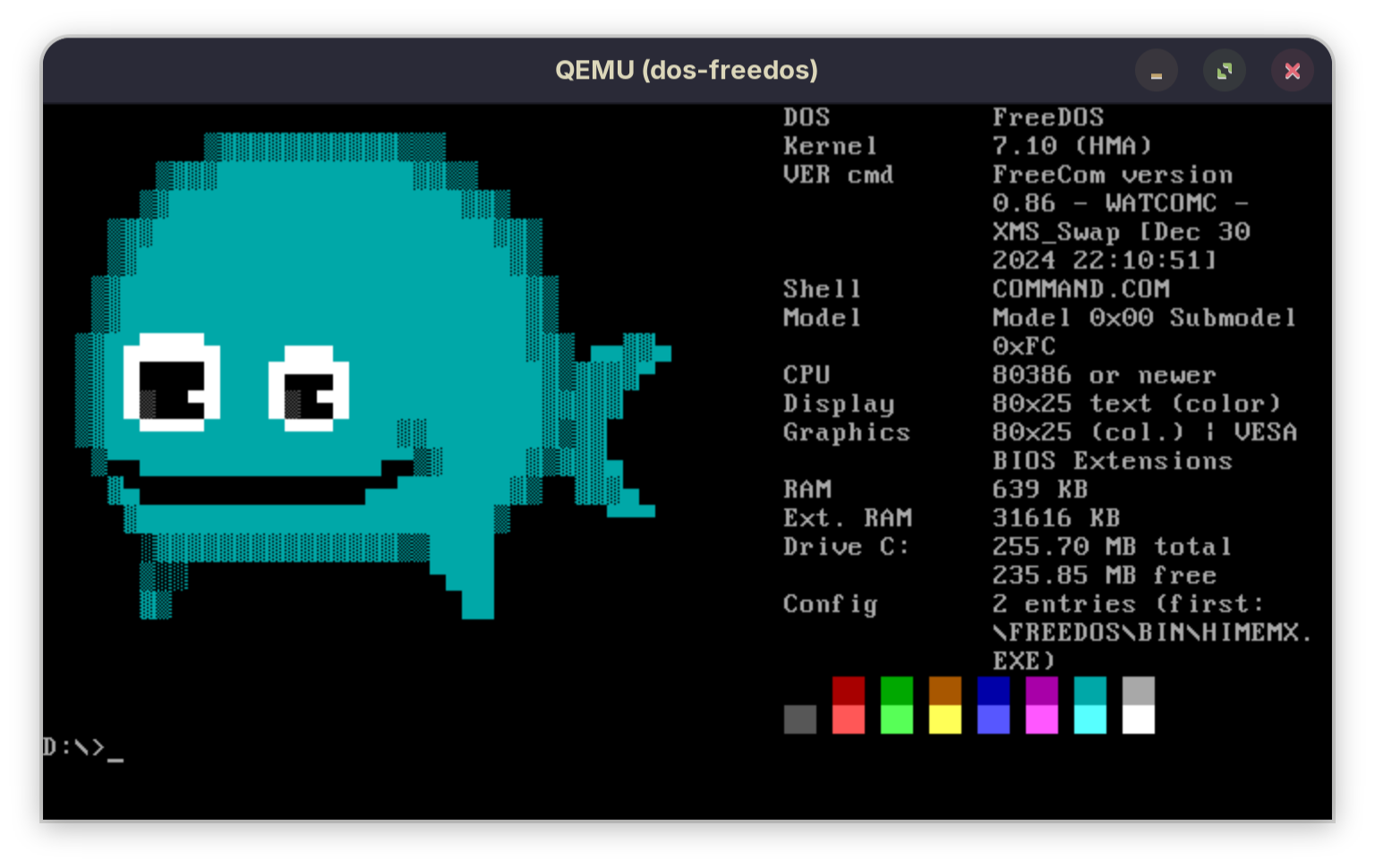
What had started as a 'simple and fun weekend project' of a nostalgic xennial dweeb quickly turned into an endless rabbit hole of digging through archive.org to find ancient DOS installation floppy images, investigating the forgotten realms of interrupts, and diving into source code of MS-DOS and the DR-DOS kernel.
I came out with the realization that from today's perspective even with a seemingly 'simple' operating system, all the different DOS flavors and variants have their own weird quirks and unique characteristics that made it more difficult to realize this project than anticipated. Eventually I got it to work on several different popular DOS emulators with different DOS 'distros' and on bare-metal DOS installations on my trusty old ThinkPad X220.
This work would have massively exceeded its scope without the assistance of ChatGPT Codex digging through 1980s source code and help debug and refine my sloppy C code.
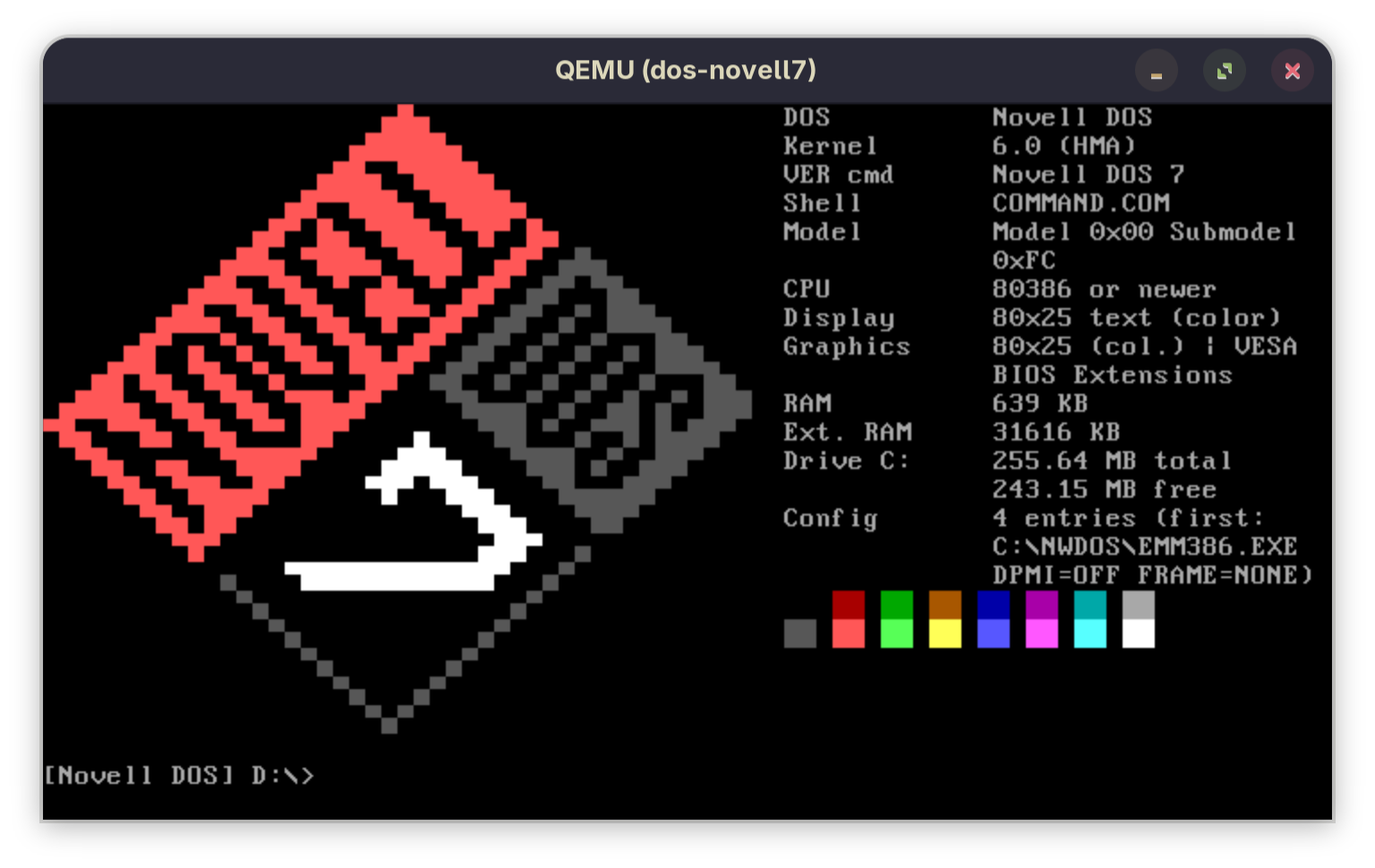
After months of putting the project off because I was so worn down by spending days wrestling with weird memory hiccups and rendering glitches I was pretty close to giving up on the whole thing. What kept me going were JONINSCII's steady motivational nudges and the patient detective work of Claude Opus, which eventually managed to iron out the quirks.